

Robot Vacuum and Mop - Hands-Free Cleaning Made Easy
If you're looking for an automated cleaner that is hands-free and can do it all, consider this 2-in-1 robot. It mops hard floors and vacuums carpets with low and medium-pile carpet, and its app lets you design no-mop zones as well as adjust cleaning schedules and modes.
Find models that sense what type of flooring they're on, take out their own water tanks and dirt and avoid obstacles like phone chargers, socks and pet hair. Find out how easy the unit is to install.
Self-Emptying
As the world gets busier and more chaotic People are always seeking ways to reduce their work load. Robot vacuums and mop are among the top tools that are available to assist you. They can clean up dirt, crumbs and pet hair while simultaneously scrubbing and wiping floors clean. You can make use of your smartphone and voice assistants to control these machines with pre-programmed routines and specific room designations.
One of the most efficient time-savers for both the users and machines are self-emptying models that don't need you to empty the dustbin after every cleaning cycle. This will save you time and let your robot clean the entire house more often.
If you're thinking of a model that self-empties it, make sure to verify the size of the bin because it could quickly overflow if frequently used. You should also ensure that the system doesn't overfill, causing obstructions that prevent the robot from emptying it fully.
The self-emptying feature works by taking the dust bin inside the machine and putting it in a larger storage container -- think of it as the bag that comes with a traditional vacuum cleaner -which can be empty every two or three cycles. These robots are worth the extra expense because they have this premium feature.
For the mopping function Some models wash and dry their own soiled pads after each use. Others have docks that does the work for you, and you only have to empty it once or twice per year.
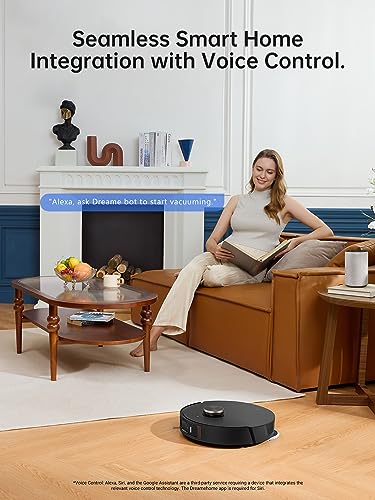
Check out this Roborock robot which is highly rated for its ability to perform both tasks. The RockDock-S7 MaxV Ultra can both mop and vacuum, thanks to a the dock that can do all the maintenance for you. You can schedule the unit to start by using voice assistants like Alexa or Google Assistant. You do not have to empty the tanks by hand. It has boundary strips that stop it from straying into other areas of your home when you don't want it to.
Object Avoidance
The best robot vacuums have object avoidance. This makes it easier for the device to navigate around furniture leg and stray toys. This is essential for busy households with kids and pets, as should the robot come into contact with these items they'll likely jam or break it.
The technology is usually based on a single sensor or two sensors that are located near the bumpers that absorb shocks of the vacuum cleaner. When sensors detect a roadblock the robot will then reorient and turn until it can find an open path. Some models use lidar technology, which uses lasers to determine the distance between the robot and nearby objects. This enables it to create a map of its surroundings in real-time and move more efficiently around your home.
Other robovacs which don't employ lidar technology are designed to use monocular or binocular vision to identify obstacles using cameras. These systems are effective in ideal lighting conditions, but not so well in low-light conditions or with items that are identical to their surroundings. For example, a robot that has monocular vision will have trouble seeing shoes or cables.
Certain advanced robot vacuums can be more than just avoiding obstacles, which is why they're also called smart vacs. They can create a virtual map of your home's layout, and allow you to direct them to specific areas or rooms using the application. They'll even remember places they've cleaned before which will reduce the time spent cleaning and ensure that your home is thoroughly clean.
Many of the most modern robotic vacuums and mops can change between floor types. Certain robot vacuums and mops automatically detect the type of flooring in a certain room and adjust suction and brush functions in accordance with. Some even allow switching between hard and carpet without losing suction power.
All smart vacuums and mop should have some form of obstacle avoidance, irrespective of the type of flooring. These features ensure that the devices don't get caught in the wires which can cause them to lose suction. Some models have a list of items they are aware of like socks, shoes and pet waste. click the up coming site can identify these objects and calculate their size and distance, and avoid them without crashing into them.
Floor Mapping
Most robot vacuums are equipped with sensors that can detect objects. If a object -- like furniture legs or a random toy is thrown in the way, it triggers a sensor that instructs the vacuum to turn away from the obstacle and to move towards a cleaner section of the floor. The sensors aren't completely foolproof. The Roomba 900 Series, for instance, was able to avoid our headphones and shoeslaces, but it accidentally sucked up cables. We suggest removing objects from the robot's path prior to running it through your home's rooms.
Many of the mopping and vacuum robots we have tested in The Spruce include an app. You can use it to save maps, create schedules, select cleaning options and track your robot's performance. The best apps offer features that improve the efficiency of your robot. They are intuitive and easy to use.
App integration also lets you keep an eye on your robot's water tank and dirty pads. Look for models that allow you to check how full the tank is and how much the pad is wet, and when it's time to change the pad. You can set up a routine that automatically changes the pad when wet, to stop mildewy odors from growing.
The mapping feature is essential for robot vacuums that work on different floors. It lets the robot create a virtual map of your home that it can use to navigate between rooms and clean various areas more thoroughly. Some robots combine sensors and artificial intelligence to create maps. For instance, iRobot's Vacuuming Mapping makes use of multiple sensors to scan a space that includes walls and corners to determine how far the robot can travel before hitting furniture or bumping into obstacles.
Other robots, like the Ecovacs DeebotX1-OMNI or the Roborock S7 MaxV Ultra, utilize optical sensors to determine where walls are. They can then follow the edges of furniture or employ an algorithm for mapping to determine the most efficient route for each room.
Mopping Settings
Robot vacuums are automatic and all you need to do is to press a button in the app or on the remote control to trigger them to sweep a space. You can also set schedules using voice commands. This is a great feature for busy families who want their robot vacuum cleaners to complete their work at the exact time each day.
The majority of robot mops utilize microfibre pads that are moistened by water tanks at their base, and many are able to be used repeatedly before needing to wash or replace the pad. Models that are able to adjust the flow of water to suit different floorings are ideal. You should also take into consideration the size of the tank, if you are able to switch the cleaning mode between dry and wet mopping, and how long a robot mop can last on a single charge.
The best robot mops can clean floors quickly and efficiently, even under tables and around obstacles. Although they are not perfect, they can have trouble climbing stairs or maneuvering ledges between rooms. They can leave streaks on tiles or timber, particularly in sunlight.
A robot vacuum and mop that is of good quality should also have carpet sensors. This is a vital feature for those who have multiple floor types in your home, because it ensures that the cleaner won't be sucked up by or sucked into a rug. It should be able to identify other objects that could interfere with the cleaning like cords and tassels. This will enable you to create "no-go zones" that prevent the robot getting into these areas.
The majority of the robots we test in our CHOICE lab have smart app integration that lets you save your home's maps, set cleaning schedules and choose cleaning modes. You can also create virtual barriers to keep your robot out of certain areas and receive (sometimes humorous) error alerts when the device is experiencing issues. Certain applications are more user-friendly than others, and a few provide a live webcam for monitoring of your robot.